overview
Interests: political ecology, climate and energy politics, climate science, just energy transitions, land, rural livelihoods, critical food and nutrition studies, mixed methods and interdisciplinary research, feminist and queer theory, marine wildlife + policy.
My primary research examines the politics of energy transitions. I am interested in how discursive trends underlie (and rationalize) energy policy decisions, how this affects land and resource access and control for communities that live near large-scale energy projects, and how different knowledges can be used to imagine and realize more transformative climate and energy futures.
Second, based on prior experience in international development on issues of food security, I collaborate with scholars in critical food and nutrition studies to interrogate logics used in international food and nutrition projects, and how these affect understanding healthy and well-nourished bodies.
Lastly, while not yet extensively developed, I have a keen interest in blue political ecologies, and the implications of climate change mitigation strategies (such as offshore wind) for marine wildlife.
My Google Scholar profile is here.
ongoing research
Advancing transformational energy justice across the renewable energy supply chain
As a postdoc in the Department of Geography & Spatial Sciences at the University of Delaware (UD), I am involved in a Sloan Foundation funded two-year research project entitled “Advancing transformational energy justice across the renewable energy supply chain.” The research is carried out by a team of scholars from UD, Boston University, and Virginia Tech, using a feminist, anti-racist, indigenous and postcolonial framework to examine issues of justice across the wind and solar supply chains, grounded in qualitative research in at least eight case studies across the U.S. UD is leading the wind part of the research. For anything related to my work at UD, you can reach me at mvdbold@udel.edu.
Greening energy: the politics of renewables in Senegal
My doctoral research at Clark University‘s Graduate School of Geography examined the question of how to shift to an energy system that is predominantly based on low-carbon energy without creating new social and environmental injustices in the process. The research focused on Senegal, where over the past few years several utility-scale solar PV and wind energy projects have been rolled out. While this political drive to developing renewable energy capacity quickly is notable, these developments are taking place in a context where i) most land is state-owned, posing questions for maintaining people’s rights to land and other resources, and ii) offshore discoveries of oil and gas are now drastically reshaping the energy sector in the country. My research examines what kinds of narratives are mobilized in political decision-making around low-carbon energy, who deploys and negotiates these, and what material implications this has for the lives of people living on or near these project sites. My research thus operates at multiple administrative levels, with a case study focus on the recently inaugurated 158 megawatt Taiba N’Diaye wind power project. Two of my dissertation papers have been published thus far, in Renewable and Sustainable Energy Transition (2023) and Environment and Planning E (2021).
Funding
- National Science Foundation Doctoral Dissertation Research Improvement Award (DDRI) (2020)
- George Perkins Marsh Institute at Clark University Albert, Norma and Howard Geller ‘77 Endowed Research Award) (2019)
- Edna Bailey Sussman Foundation Doctoral Dissertation Fellowship (2021), Sussman Fund Graduate Scholarship (2019)
- American Geographical Society Council Fellowship (2019)
- American Philosophical Society Lewis and Clark Field Scholarship (2019)
- Graduate School of Geography at Clark University Pruser Dissertation Enhancement Award (2018), Atwood Fund Graduate Research Enhancement Award (2016)
PhD Committee
- James McCarthy, Committee Chair, Clark University
- Ed Carr, Committee member, Clark University
- Karen Frey, Committee member, Clark University
- Ruth Meinzen-Dick, Committee member, International Food Policy Research Institute
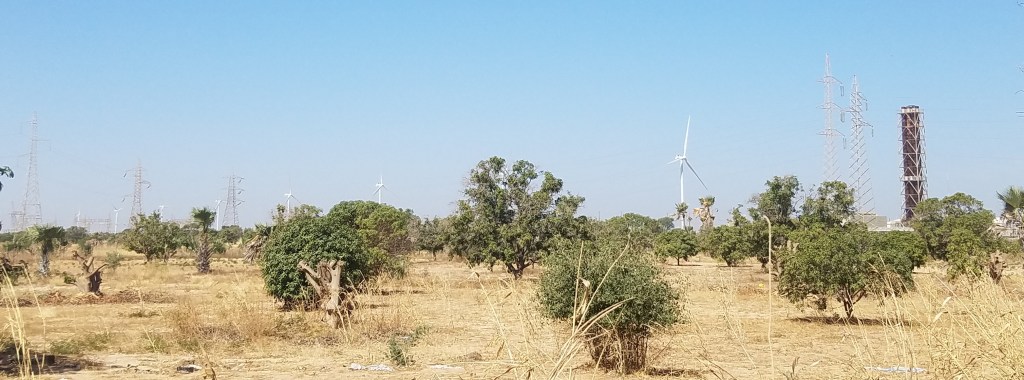
Parc Eolien Taiba N’Diaye, Senegal / Photo: Mara van den Bold, 2020
(Critical) food and nutrition
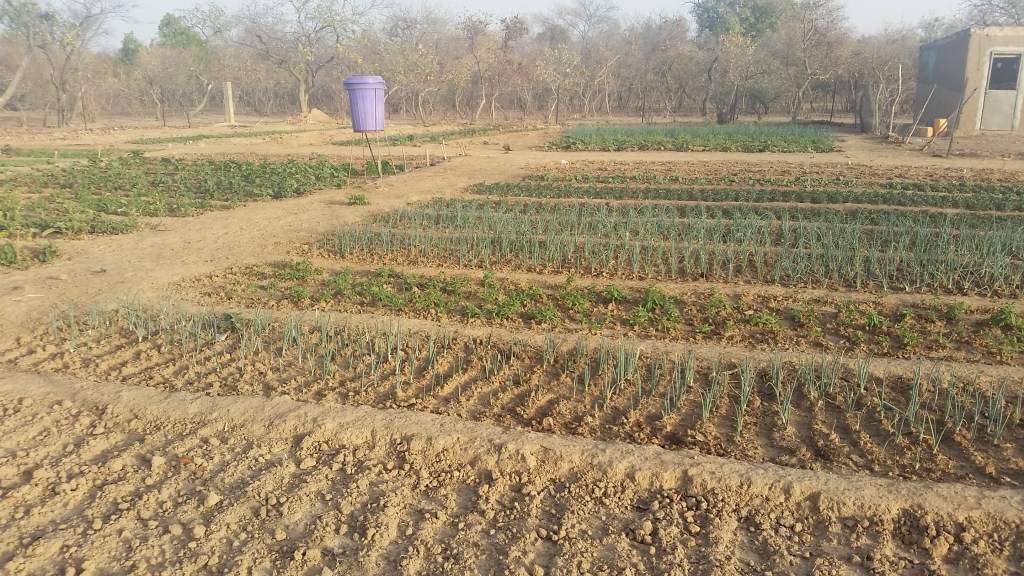
Between 2012 and 2021, I was a (Senior) Research Analyst at the International Food Policy Research Institute (IFPRI). My research at IFPRI primarily focused on examining the impact of agricultural programs on nutrition as well as the politics of food security and nutrition policy, and the gendered dynamics of access to these resources.
I generally worked as part of large multi-country and multi-disciplinary research teams, focusing on: i) analysis of agricultural data in sub-Saharan Africa on gendered land ownership, ii) evaluating agriculture-nutrition programs in West Africa and their impacts on intra-household dynamics, food security and nutrition outcomes, and iii) agriculture and nutrition policy processes in South Asia and sub-Saharan Africa. I co-led and coordinated several rounds of mixed methods studies in sub-Saharan Africa and South Asia (see my CV for more information).
Being in a critical geography program allowed and inspired me to examine and write about food and nutrition from more critical perspectives, particularly in collaboration with colleagues working from critical nutrition and health studies. One of these collaborations was published in Agriculture and Human Values (2022).
 Mara G. van den Bold